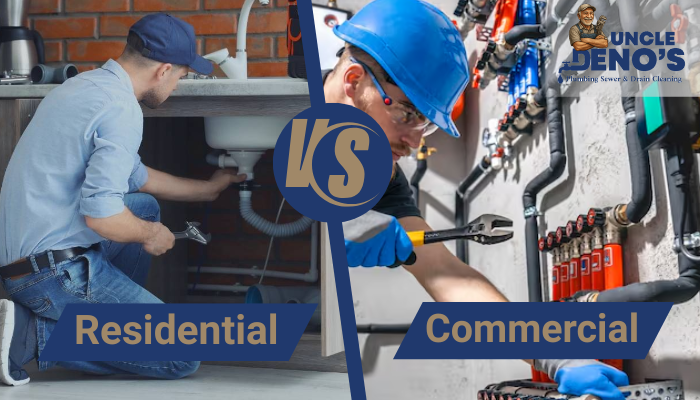
The basic difference between residential and commercial plumbing is that residential plumbing is a very basic, simple domain, involving fixing leaks, clogged drains, and other residential pipes and fixtures. Commercial plumbing, on the other hand, is a very complex field that requires extensive learning and rigorous training to handle the intricate commercial plumbing requirements. Both types need skill sets to ensure reliable fixes, but a commercial plumber has a more advanced skill set and has to follow stricter regulations for the smooth execution of the project.
A Deep Dive into the Residential vs. Commercial Plumbing: What Sets Them Apart
Are you thinking about hiring a plumber to fix that annoying leaky faucet in your master bath? Do you know that plumbers have to follow the International Plumbing Code if they are to perform any residential plumbing task in the US? Whether you require the services of a plumber for your home plumbing woes or need one to handle an emergency plumbing scenario in your commercial setup, understanding the basic difference between both types is essential to understand the importance of the trade and to appreciate their endeavors to make our lives stress free.
| Important fact
To work on a larger level, a commercial plumber would have to acquire an NVQ Level 3 Plumbing Qualification. |
Here is your guide to understanding the key difference between residential vs. commercial plumbing.
Scale of the Project
Residential plumbing is a relatively simpler, easier version, involving simpler fixes of clogged drains, leaky faucets, and other fixtures. Plumbers can easily diagnose and handle the tasks and ensure quick fixes. Commercial plumbing, on the other hand, requires installing and maintaining complex plumbing in a multistory commercial setup. Merely diagnosing and then performing repairs involves careful handling of a system that is more prone to damage.
System Layout and Design
Residential plumbing systems are fairly straightforward, requiring a simple network of pipes. Commercial plumbing is like an intricate plumbing maze with complex arrangements. It’s spread across multiple storeys with pipes, sewer lines, and toilets in multiple locations.
Skillset and Required Training
The basic skillset required for a residential plumber is less demanding. Commercial plumbers undergo rigorous training to ensure they can handle the complex requirements of a multi storey building, facing problems residential plumbers may never face in their career.
Codes and Regulations
Both types of plumbing services have to follow a different set of federal and state rules to ensure the job done is code compliant. However, there are stricter licensing requirements for commercial plumbing as it involves handling complex projects that can disrupt the business workflow if not performed efficiently.
Time Frame of the Projects
Residential plumbers can handle the relatively simpler tasks easily, usually within a few hours. Plumbing issues related to commercial projects are not simple and may take even days to fix the complex drainage systems.
Daily Usage
The daily usage of residential plumbing is very low compared to commercial plumbing, which is under strenuous pressure 24/7 due to the frequent use and the massive number of people using it round the clock.
Probability of Damage
Residential plumbing is a simple network of pipes, and the probability of damage is almost negligible compared to commercial systems. Commercial plumbing is more prone to damage as it involves a complex network of pipes and a drainage system. One minor error can lead to significant damage, causing immense loss to businesses.
| Fast Fact
Domestic plumbers mainly work independently or with a colleague, while commercial plumbers are required to coordinate with professionals such as engineers, project managers, and construction managers. |
Conclusion
The basic differences between residential vs. commercial plumbing revolve around the scope of the projects and the codes and regulations required to perform both types of services. Commercial plumbing involves a more complex plumbing system and requires more plumbing fixtures, drain lines, and pipes. Their job demands quick scheduling and efficiency to prevent business disruptions. Residential works and systems are relatively easier, quick fixes, and a simpler network of pipes and drains. Understanding the difference helps us to make informed decisions when requiring emergency plumbing services.
FAQs
What is the highest level of a plumber?
Master plumbers are the highest level, requiring years of experience and thorough knowledge of the trade.
What is the difference between industrial and commercial plumbing?
Commercial plumbing is more about fixing plumbing related issues, such as leaks and malfunctions, in hotels and offices, while industrial plumbing revolves around large plumbing networks implemented in these buildings.
What are the different types of plumbing systems?
Different types of plumbing systems include sewage, water, and drainage plumbing, each designed and installed to ensure efficiency.